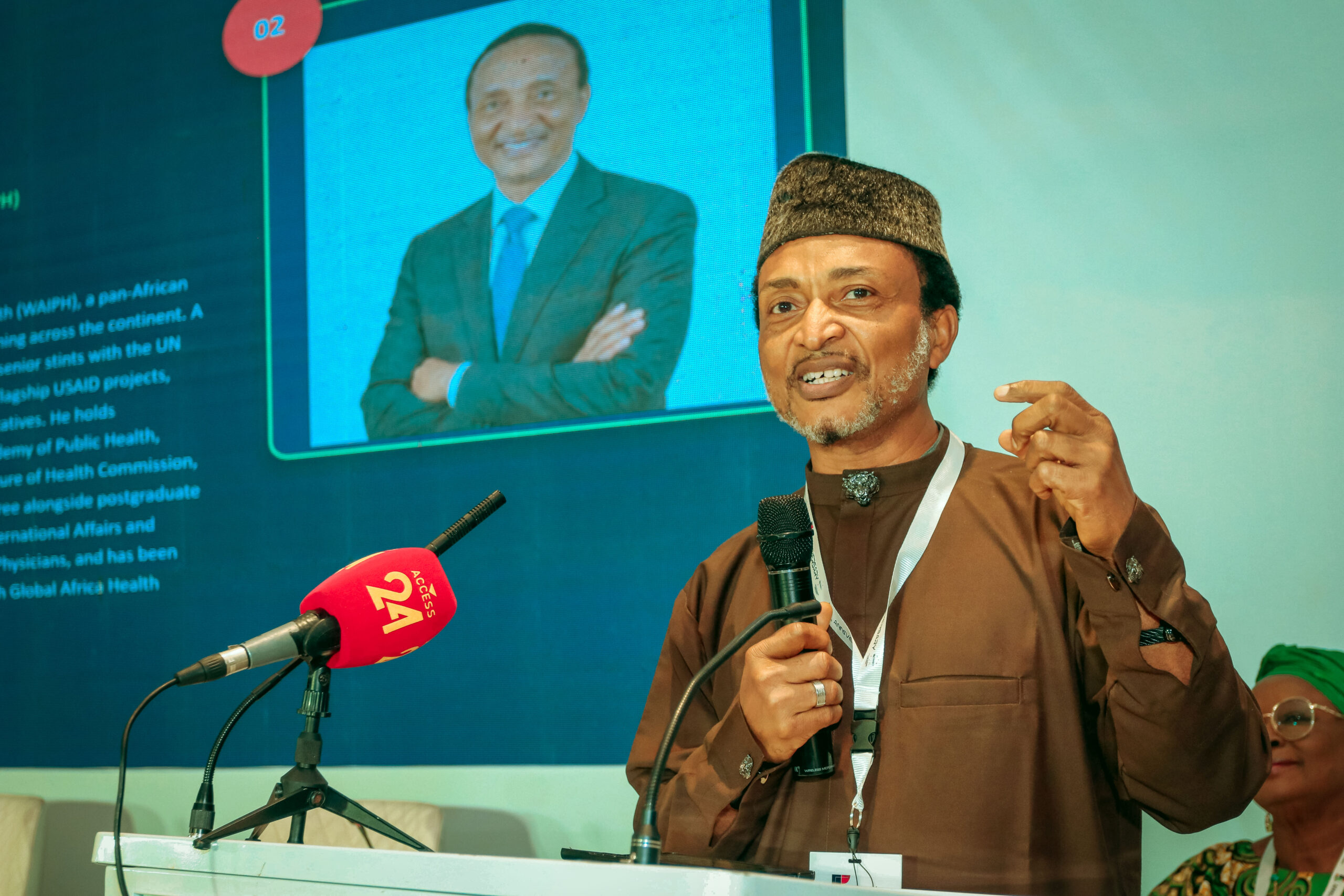
Delivering the anniversary keynote, “The Geometry of Grace: TAConnect and the Quiet Revolution at the Frontline of Motherhood,” the Director-General of the West African Institute of Public Health traced the organization’s rise from a microscopic seed to a towering institutional presence across nineteen states.
“There is a particular kind of quiet courage,” Dr. Francis Ohanyido told the anniversary audience, “that belongs to those who look at a vast, fragmented landscape and choose not to despair, but to build.” With that opening, the Director-General of the West African Institute of Public Health and Chair of the Africa Future of Health Commission delivered a keynote that was in equal parts an empirical audit and a love letter to indigenous institution-building, anchored in the image of the Iroko tree -“Milicia excelsa”, whose seed is microscopic but, in folklore, “holds the spirit of a giant.”
Five years ago, he reminded guests, TAConnect was only an idea, a tiny seed planted “with deliberate, quiet resolve” rather than performative fanfare. Today, under what he described as the “stellar, clear-eyed leadership” of Dr. Lilian Anomnachi and her “truly magnificent team,” that seed has become a deep-rooted giant whose canopy stretches across nineteen states: from the urban energy of Lagos to the plains of Kano and Kaduna, through Nasarawa and Niger, into the fragile, conflict-affected terrains of Borno and Yobe, and across Bauchi, Gombe, Akwa Ibom, Bayelsa, Cross River, Edo, Jigawa, Sokoto, Kebbi, Zamfara, Adamawa and Taraba.
The heart of his analysis was a distinction between assistance and architecture. Conventional technical assistance, he observed, too often means “flying in external experts to patch up broken walls without ever fixing the foundation.” TAConnect chose “a different, more dignified path: systems transformation,” embedding itself within government structures and strengthening them from within, the way Iroko roots wrap around bedrock and stabilize the entire forest. That footprint, he stressed, is a clinical and systemic lifeline: integrated maternal, newborn and child health services featuring Group Antenatal Care and optimized immunization; institutionalized bundled care against postpartum haemorrhage; integration of RMNCAH services into Orphans and Vulnerable Children platforms; and structural commitment to health systems strengthening at the primary health care level.
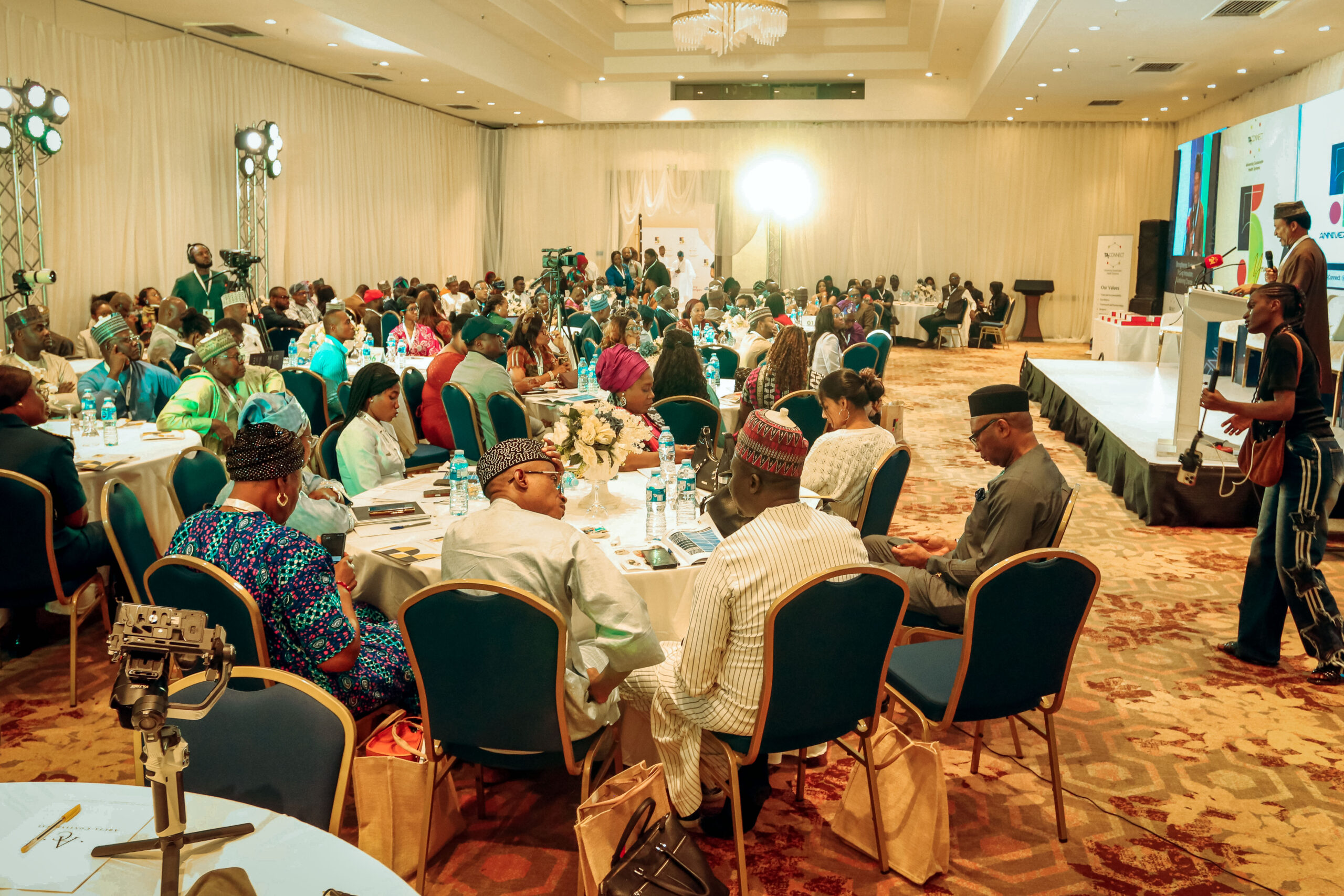
Numbers, Dr. Ohanyido insisted, “are not abstractions; they are lives”: every digit in TAConnect’s dossier “represents a mother who saw the dawn, a child who breathed easy, a healthcare worker who found their dignity restored through competence.” Beyond the quantitative record, he catalogued the deeper shifts. Group Antenatal Care, one of the largest scale-ups in the WHO African Region, has “rewritten the relationship between communities and health facilities” through self-care, participatory learning and peer support. The E-MOTIVE package, with calibrated blood-loss drapes and simultaneous bundled treatment, has transformed PPH response so that “when a mother bleeds, the facility responds as a synchronised orchestra, not a frantic solo act.” And in aligning wholly with the government-led The Maternal Mortality Reduction Innovation and Initiative (MAMII) initiative and supporting the Safe Motherhood branch of the Federal Ministry of Health, TAConnect modelled “what true health sovereignty looks like: supporting the state to lead, coordinate, and scale innovations.”
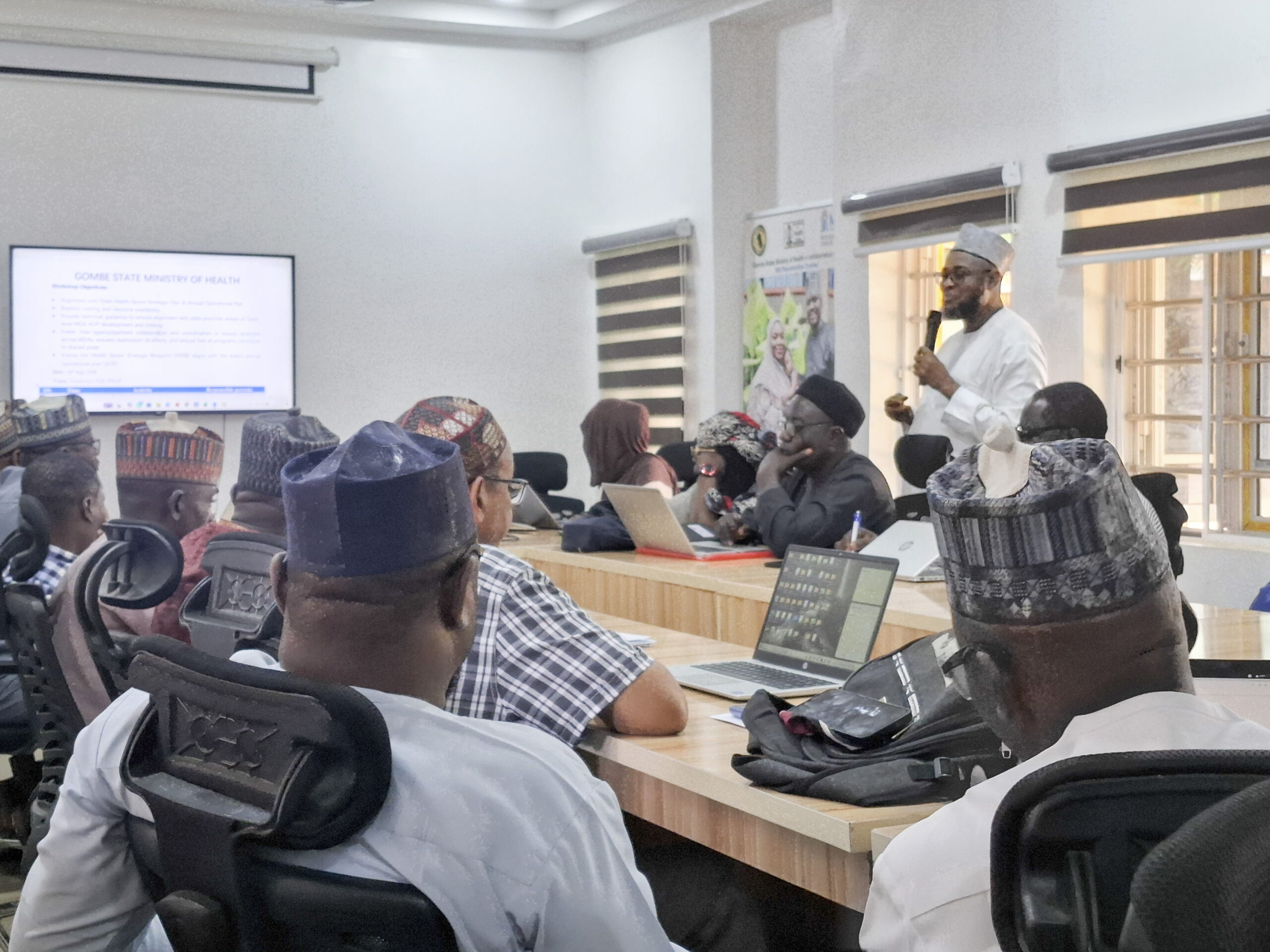
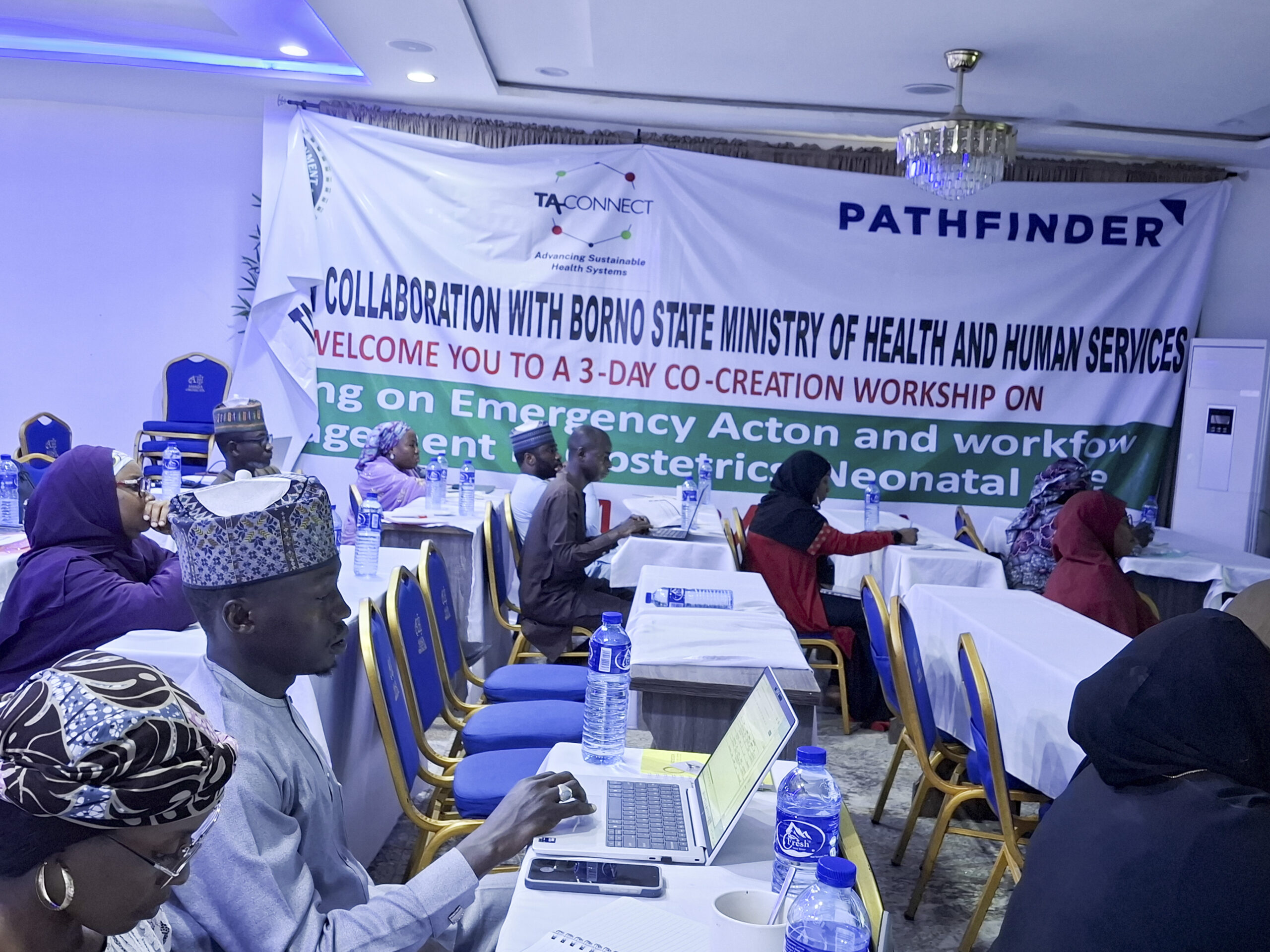
His state-by-state tour brought the canopy down to earth: Lagos, where E-MOTIVE and G-ANC acceleration met deeply analytical M&E assessments for a responsive urban system; Kano, where competency-based training of facility managers across seven domains paired with an immunization drive tracking down zero-dose children across fifteen LGAs; Borno, “perhaps the most moving testament,” where G-ANC and the PPH bundle were scaled in a conflict-affected setting alongside gender-responsive programming that restored agency and safety to women; and Nasarawa, “a masterclass in data-driven quality improvement,” with data use for decision-making doubled, stock-outs reduced, and a four-fold growth in facility business plans.
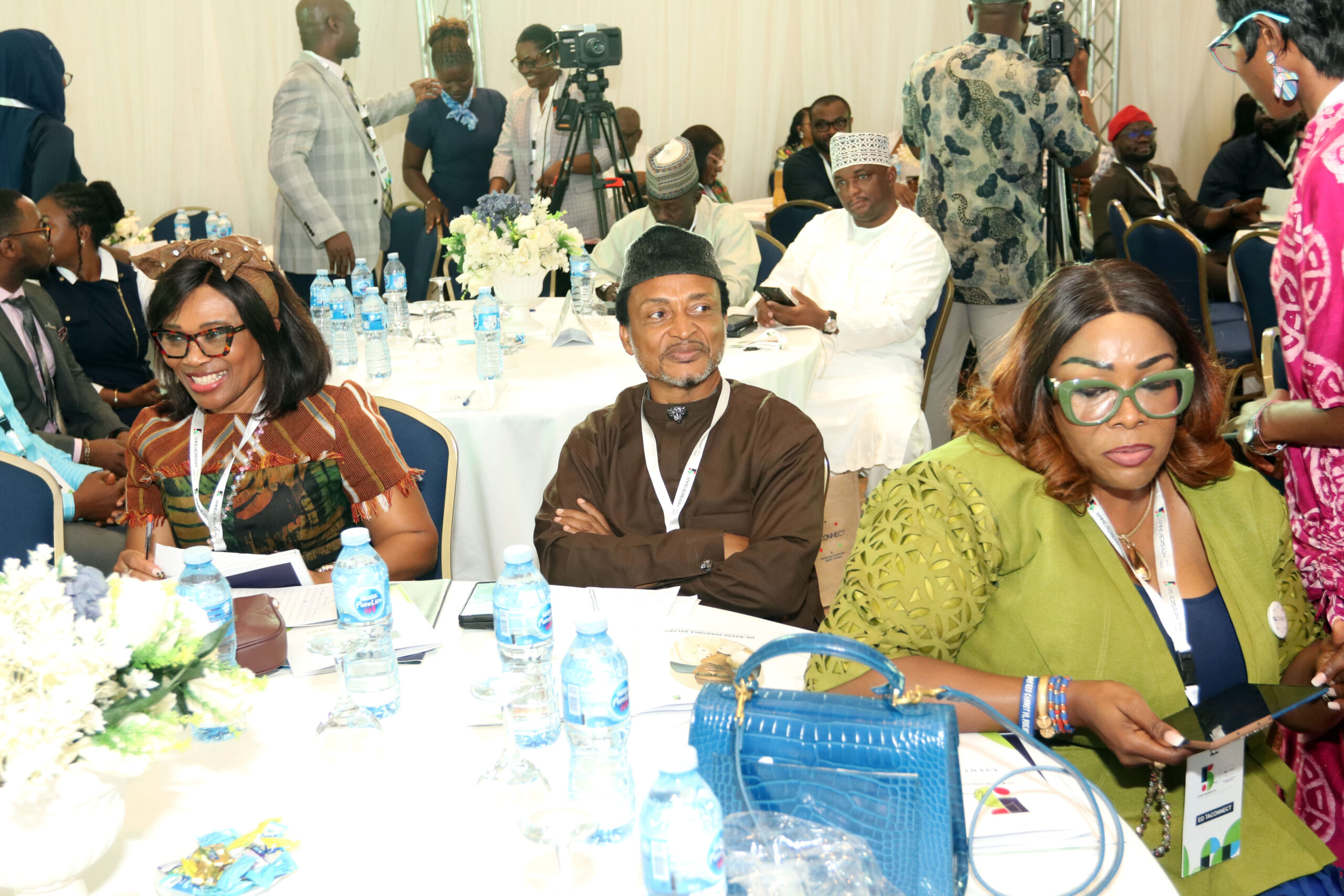
Dr. Ohanyido also spoke candidly about what he called the trust dividend. The global health ecosystem, he noted, “is often plagued by a crisis of trust: donors want to give, but they worry about leakage; local actors want to work, but they lack access.” TAConnect, he argued, has solved that equation as a trusted grant manager and fiduciary bridge, giving donors confidence that every dollar delivers value while giving local partners “the dignity of leading their own interventions.” Looking to the horizon, he charged the organization to spearhead new frontiers: mental health integration into primary care, climate-resilient health facilities, comprehensive WASH in clinics, and digital health architecture with ethical, AI-driven surveillance at the PHC frontline.
He closed by invoking Chimamanda Ngozi Adichie’s warning against single stories. For too long, he said, the single story of Nigerian healthcare has been one of deficiency. TAConnect has given the continent a new one: “a story of competence,” proof that “we do not need to import foreign timber to build our house; we have the ‘Milicia excelsa’ growing right here in our own soil.” His benediction drew sustained applause: “Happy 5th Anniversary to TAConnect, our sovereign, lofty Iroko. May your canopy continue to protect, and your roots continue to transform.”