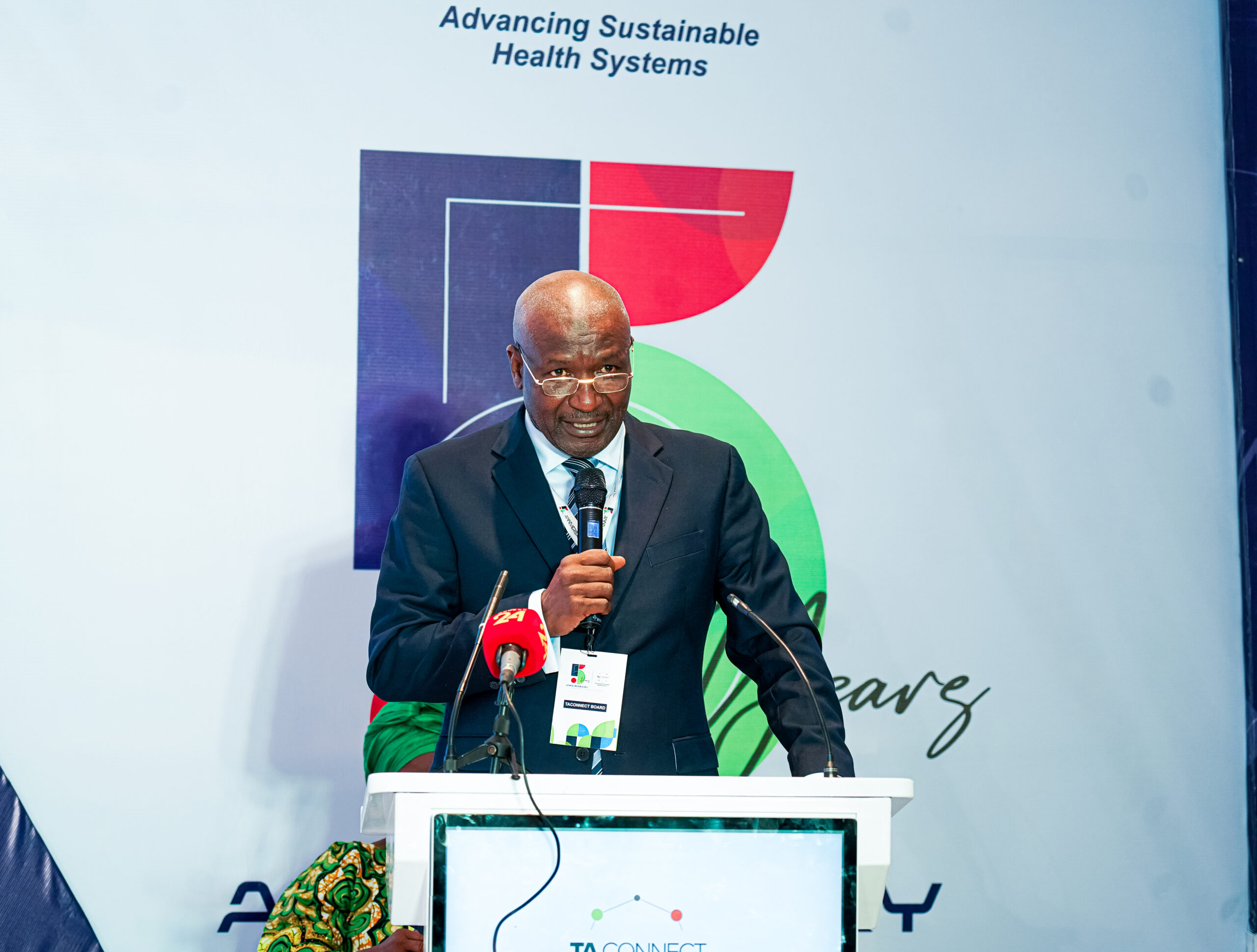
In a welcome address that set the tone for the anniversary convening, the Chairman of the TAConnect Board of Directors framed five years of impact as the foundation for a bolder next chapter.
For the women who now attend antenatal care in groups of peers rather than alone, and for the mothers whose lives have been saved from postpartum haemorrhage by a calibrated drape and a bundle of timely interventions, TAConnect’s first five years have never been an abstraction. It was this human ledger of impact that the Chairman of the Board of Directors, Dr Mohammed Kamal Abdurrahman, placed before guests as he declared the TAConnect at Five Anniversary open, describing the day as “both a celebration and a call to renewed action.”
Welcoming representatives of government ministries, agencies and parastatals, donors, development partners, implementing partners, the private sector and the media, the Chairman traced the organization’s origin to a critical, unmet need: coordinated, high-quality, demand-driven technical assistance that strengthens primary healthcare systems and improves the delivery and uptake of reproductive, maternal, newborn, and child health services. Five years on, he noted, TAConnect has grown from an innovative technical assistance hub into a trusted partner delivering context-responsive solutions across Nigeria.
Unpacking the anniversary theme, Strengthening Systems, Scaling Innovation, and Sustaining Change, he argued that health systems are strengthened not by isolated interventions but by intentional collaboration, evidence-informed decisions, capable institutions, empowered frontline workers, responsive communities, and accountable leadership. Innovation, he added, becomes meaningful only when adapted to local realities, scaled with commitment, and sustained through ownership.

The Chairman pointed to five years of support to states in identifying priority health system bottlenecks, co-creating solutions, strengthening governance, building workforce capacity, promoting data use, and deepening community engagement, efforts that have contributed to improved Primary Health Care performance, the rollout of the largest Group Antenatal Care model in Sub-Saharan Africa, and the scale-up of the E-MOTIVE bundle to prevent, detect, and manage postpartum haemorrhage and reduce maternal mortality in Nigeria.
He expressed deep appreciation to the Federal and State Governments, the Ministries of Health, the Gates Foundation, Bloomberg Philanthropies, Pfizer, the US Department of State, implementing partners, healthcare workers, and traditional and community leaders, while commending TAConnect’s management and staff for “translating vision into results.” Looking ahead, he announced that the launch of TAConnect’s Strategic Plan 2025–2030 would define the organization’s deepening contribution to resilient, equitable, and sustainable healthcare, a new phase demanding stronger partnerships, more flexible financing, greater use of data and digital innovation, and locally led solutions. “Above all,” he charged the gathering, “let us renew our shared commitment to delivering quality healthcare for everyone, especially for women and children.”