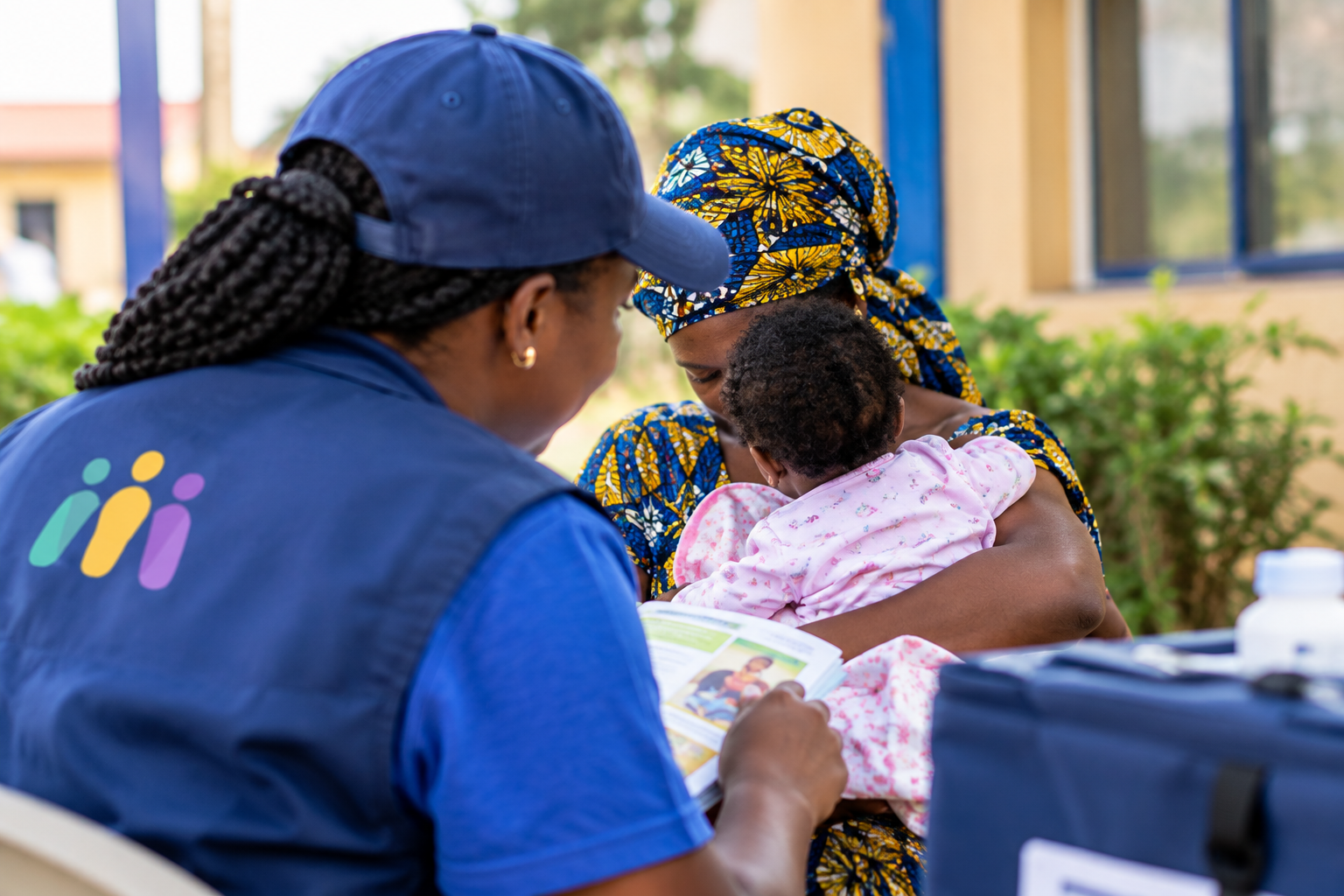
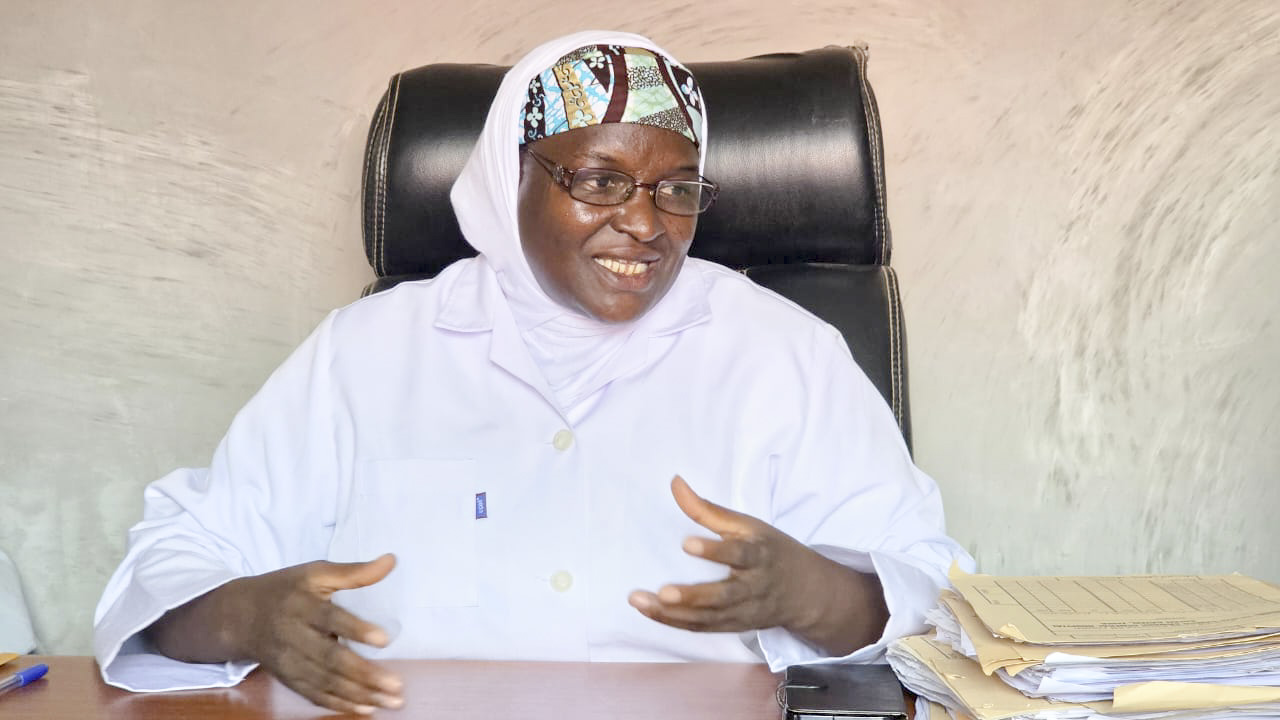
For the past year, no woman has died of postpartum haemorrhage (PPH) on Dr. Husaina Adamu’s ward. She keeps that fact close, the way she keeps the one that came before it: a voice on the labour ward, talking to her, then talking less, then going quiet, then gone. She cannot remember the woman’s name. She remembers everything else.
“We were battling it the older way,” she says. “Bring this, it didn’t work. Bring this, it didn’t work.” The patient was bleeding after delivery, and the labour ward was doing what labour wards did before anyone had a reliable way to know how much blood a woman was actually losing: reacting, guessing, trying the next thing. “As she was talking to us, we watched her going down, becoming cold. We were battling to save her life. Her voice was going the same way she was going, and eventually she gave up.”
Dr. Adamu does not tell this story for effect. As Medical Director of Hajia Gambo Sawaba General Hospital, she has managed enough postpartum haemorrhage cases, the uncontrolled bleeding that remains one of the leading causes of maternal death, to know that a labour ward without the right tools loses more than statistics. It loses the specific, irreplaceable person who was talking to you a minute ago. “It is not very nice losing a patient,” she says, “when you know that the patient came in, you are seeing the patient, talking to the patient, and the next minute you are trying to see how you will revive this patient, but the patient is gone.”
That was the hospital Dr. Adamu inherited when she first became Medical Director in 2020, the same year her facility was selected as a site for the E-MOTIVE trial under the principal investigator, Professor Hadiza Galadanchi, alongside sister sites including Ahmadu Bello University Teaching Hospital. Her team learned the new bundle from the trial researchers: a calibrated drape to measure blood loss accurately instead of estimating it, paired with a first-response protocol that acts immediately rather than reactively. By the end of that year, Dr. Adamu was posted elsewhere. She would not see how the story continued for three years.
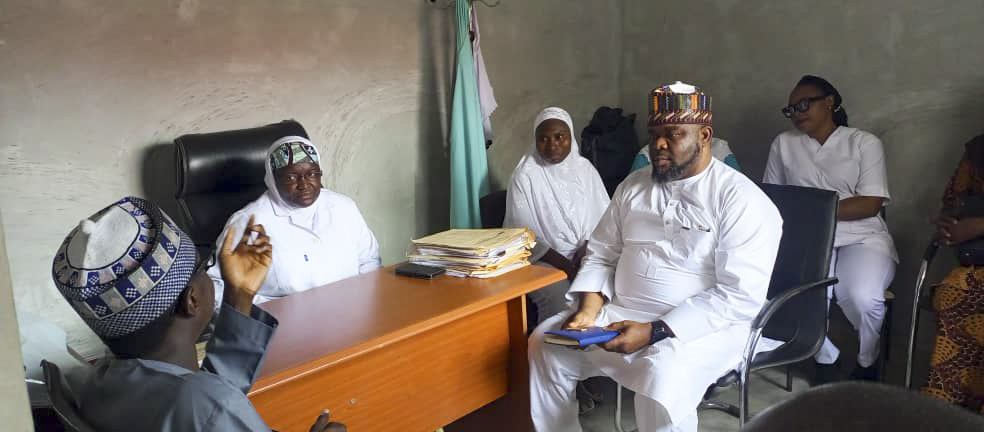
She returned in 2023 as the fuller implementation phase began and picked up where the trial had left off. “I started from where they stopped,” she says, “and the implementation of what we should do during management of postpartum haemorrhage using the E-MOTIVE bundle continued.” Over the following months, she found not a single dramatic turnaround but a steady accumulation of good outcomes, the kind that only becomes visible when you stop and count them.
She has counted them. “From last year up to this moment that we are talking now, we have not recorded deaths due to PPH. We have not.” A full year, in a hospital that once lost a woman whose voice she still remembers, without a single maternal death from the condition that used to take them. “Those sad moments, for now, honestly we don’t have them.”
Ask her why, and she does not point to one thing. She points to three. There is training, imperfect but real, though she is candid about its weak point: staff get posted elsewhere, or leave the country entirely, and the people left behind need to be trained and retrained, not trained once and assumed to be fixed. She is hopeful about what comes next specifically because of this: “Your team at TAConnect have started giving us hopes of simulation training corners, because if we have things like that, once you go for training and you come back and step down the training, it continues.” Then there is the supply chain: “Our things were brought to us to the facility from Kano directly, our drapes, our drugs. That kind of thing gave us easy access, no delay.” And there is something her own hospital built: a policy of keeping blood on hand in the maternity blood bank for twenty-four hours, with none of the paperwork that normally slows a transfusion down. “Once they see a maternity attendant coming with a request for blood, there is no too much protocol. The woman is bleeding, you quickly want to go and give blood, and you get it.” Afterward, relatives donate to replenish what was used, the same cycle repeating itself, stock going out and coming back in.
It is that same instinct, borrow now and replenish later, that shapes how she thinks about what happens when donor support eventually ends. Asked directly, she does not ask for permanence. She asks for a starting balance. “If they can give us something like a take-off commodity to start with, just like we are doing with our blood bank, if we have things on the ground, we will be able to see, okay, now we have commodities. This is a starter for us.”
Her hospital was one of nine health facilities formally transitioned to TAConnect from the African Centre of Excellence for Population Health and Policy (ACEPHAP), the institution whose E-MOTIVE trial had first brought her the calibrated drape, as the Gates Foundation-supported work entered its next phase.
The three maternal deaths her hospital has recorded over the past year did not come from postpartum haemorrhage. Two came from eclampsia, one from sepsis. Dr. Adamu names them without being asked, because she already knows where the next fight is. It is why she is watching the arrival of TEAM-OB/NEO – Training for Emergency Action, Management and Workflows in Midwifery and Obstetrics/Neonatal Care initiative- with something close to relief. It is a broader quality-improvement approach than the one that got her this far: multidisciplinary teamwork, standardized clinical workflows, simulation-based learning, and continuous mentoring, all aimed at the same goal as her own blood bank policy and her hopes for a simulation center, making sure the people on her ward are ready before an emergency arrives, not scrambling once it has. “That is why we also want the TEAM-OB/NEO,” she says, “so that we can diversify in the management and try to reduce the mortality from other causes.”
She still cannot remember that first patient’s name. She remembers everything else about her. What she is building now, one uneventful discharge at a time, is a hospital where fewer names will need remembering for that reason at all.