Consider a midwife working in a general hospital in one of Nigeria’s northern states. Over three years, she has been pulled off duty for four separate training programmes. Each taught her something useful. Each also taught it slightly differently, assessed her against a different standard, and left behind a different set of job aids. When a woman begins to bleed heavily after delivery at two in the morning, that midwife does not recall four curricula. She recalls whichever sequence her team has practised most recently, and hopes her colleagues recall the same one.
This is the problem the TEAM-OB/NEO Curriculum and Training Package Workshop set out to solve.
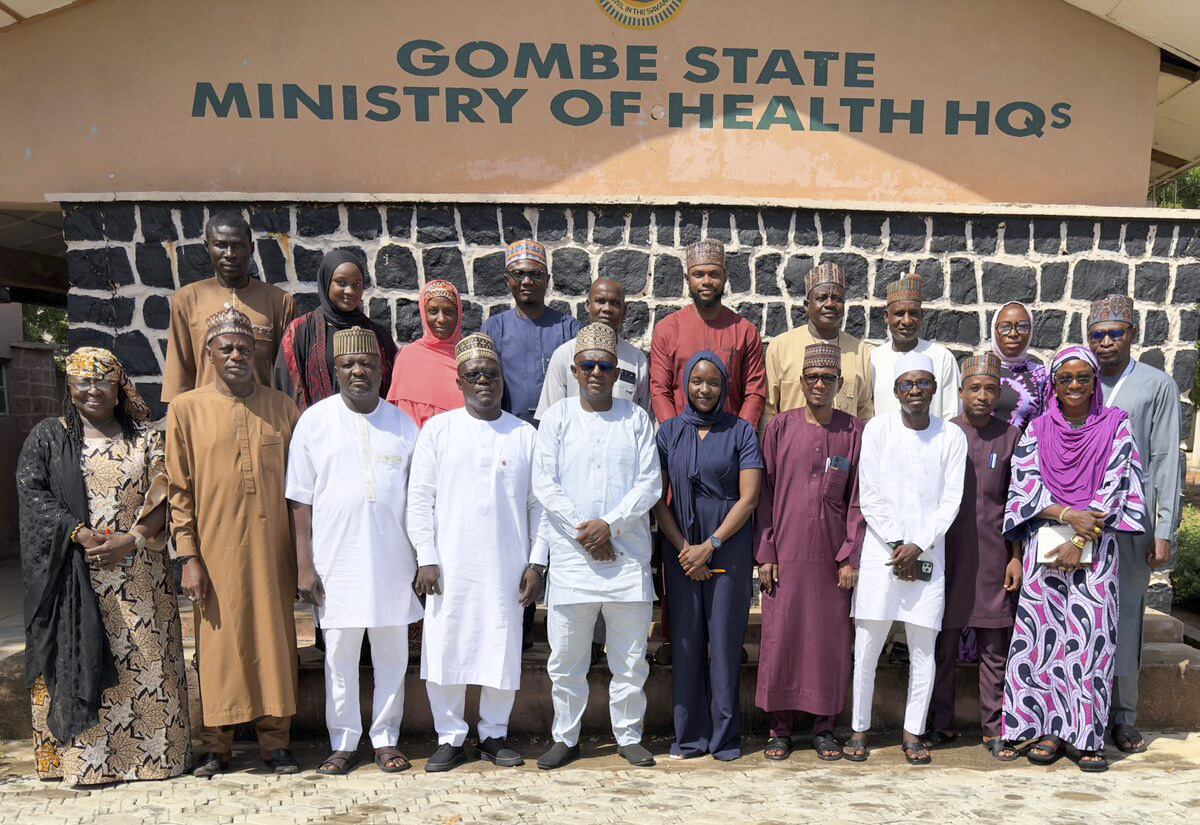
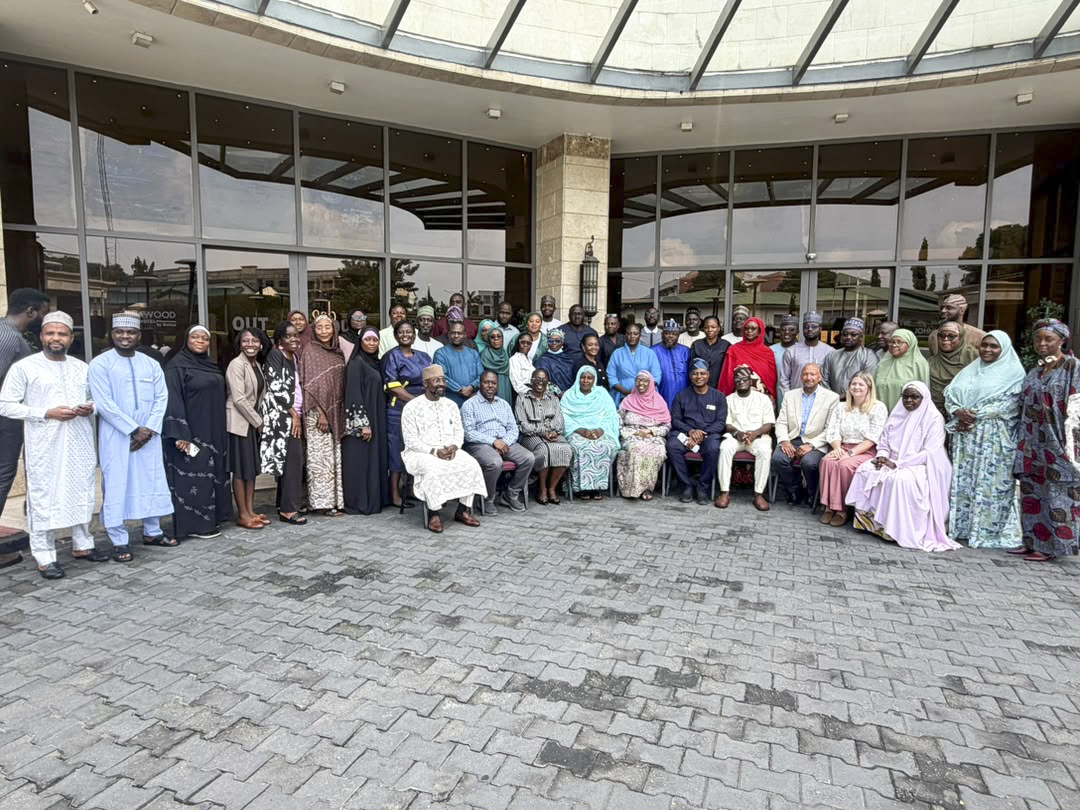
From 13 to 16 September 2026, the Innovative Platform for Maternal, Neonatal and Child Health convened government representatives from the Federal Ministry of Health and Social Welfare, clinical experts, professional bodies, development partners, state representatives and technical advisors at the Johnwood Hotel in Abuja. Their task was to take Nigeria’s proven but separately implemented maternal and newborn health training models and harmonise them into a single competency-based, simulation-supported package that works at primary, secondary and tertiary levels of care.
The cost of a crowded field
Nigeria does not lack evidence-based approaches to maternal and newborn emergencies. It has Practical Obstetric Multi-Professional Training (PROMPT), the Safer Births Model of Care, E-MOTIVE for postpartum haemorrhage, BORN-aligned newborn simulation, Life Saving Skills, and the Basic Emergency Obstetric and Newborn Care (BEmONC) and Comprehensive Emergency Obstetric and Newborn Care (CEmONC) standards. Each has produced gains. The difficulty is what happens when they arrive independently.
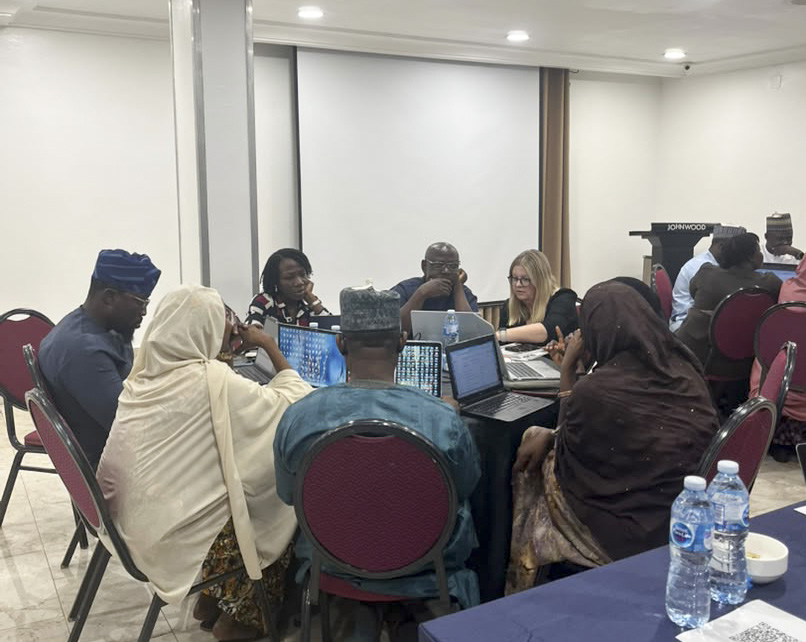
The workshop named the consequences plainly. Training efforts are duplicated and resources consumed twice over. Clinical messages and protocols vary between facilities. Competency standards differ from one health worker to the next. Continuity of practice at facility level is limited. And health workers are repeatedly removed from clinical duties for uncoordinated programmes, a cost borne ultimately by the patients who are not being attended to while their providers sit in a training hall.
Harmonisation, in this light, is not a tidying exercise. It is a way of returning clinical time to clinical work and giving facility teams one standard to hold themselves to.
Learning from what already works
The first day was given to studying the two most developed models in the room rather than starting from a blank page.
The presentation on PROMPT set out an approach that combines clinical knowledge with practical skills, simulation, teamwork, communication and situational awareness. Its central point framed much of the discussion that followed: knowing the right action and being able to perform it under pressure are different capabilities. Algorithms, checklists and emergency boxes matter precisely because they reduce a team’s dependence on memory at the worst possible moment. Multidisciplinary training matters because health workers who have practised together understand one another’s roles and gain the confidence to speak up and escalate. Innovations introduced in training, the Modified Obstetric Early Warning Score among them, only justify themselves when they migrate into routine practice rather than remaining classroom knowledge. Sustaining any of this depends on state and facility ownership, clinical leadership, capable trainers and continued support after the training ends.
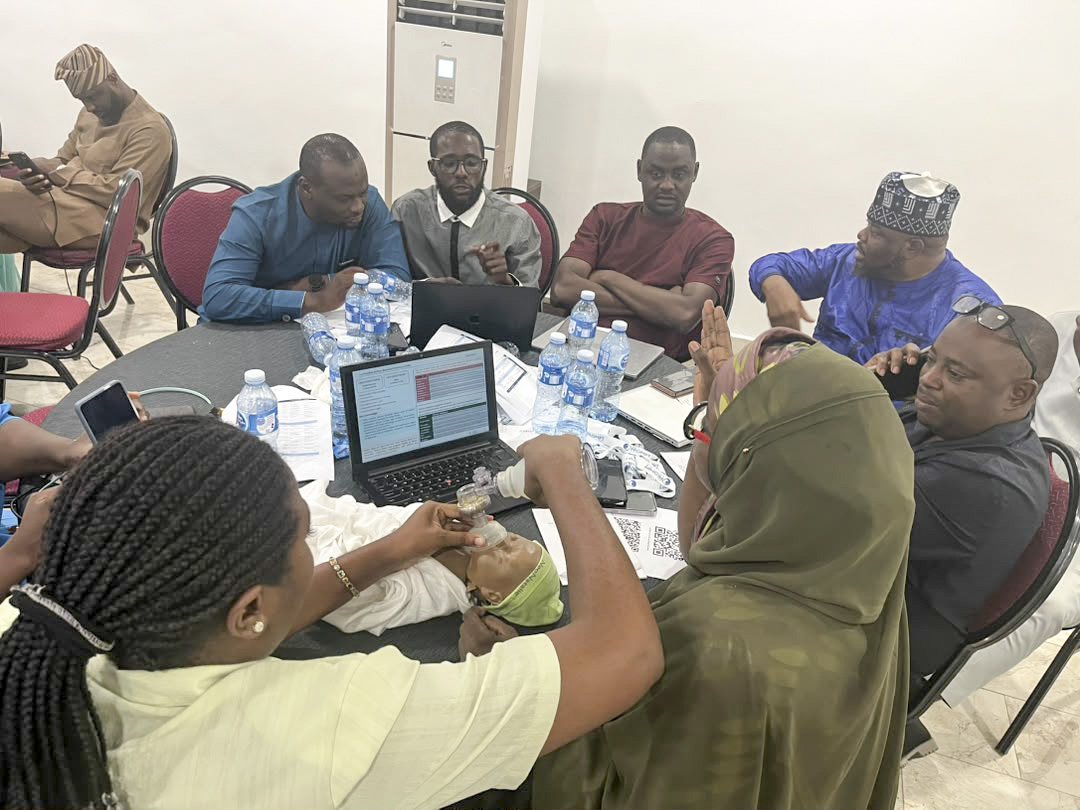
The Safer Births Model of Care offers a complementary architecture built on a cycle of knowledge acquisition, skills development, simulation practice and clinical application, supported by faculty, mentors and facility-based champions. Its most portable insight was the principle of low-dose, high-frequency learning: rather than depending on occasional workshops, health workers practise key skills regularly, with fuller team-based simulations at longer intervals. Two further points carried into the TEAM-OB/NEO design. Simulation works best in a no-blame, no-shame environment, where the purpose is to expose gaps rather than to catch people out. And simulation resources should match facility capacity, since not every facility needs identical equipment and hub-and-spoke arrangements can extend access to more sophisticated resources.
These principles shape what TEAM-OB/NEO is meant to be. Not a one-off workshop but a continuous learning model built on state master trainers, facility-level step-down training, ongoing mentorship, simulation practice and regular reinforcement, aligned to state health plans and owned by the states themselves.
What held the work together
Several themes cut across all five groups. Draft content must align with current approved national guidance, with further technical review wherever recommendations diverge. Teaching must move beyond the didactic into simulation, scenarios, OSCEs, demonstration and structured debriefing. Interventions must be clearly assigned to BEmONC and CEmONC levels so that stabilisation and timely referral are unambiguous. Practical tools such as the Modified ANC Warning Score, the Labour Care Guide, management algorithms, job aids and theatre counting processes must be standardised into the package. Patient safety principles must be embedded throughout. Materials must remain simple enough for facility-level use while retaining the clinical detail that safe management requires. And scenarios must reflect realistic facility situations, with defined expected actions, critical steps and assessment criteria.
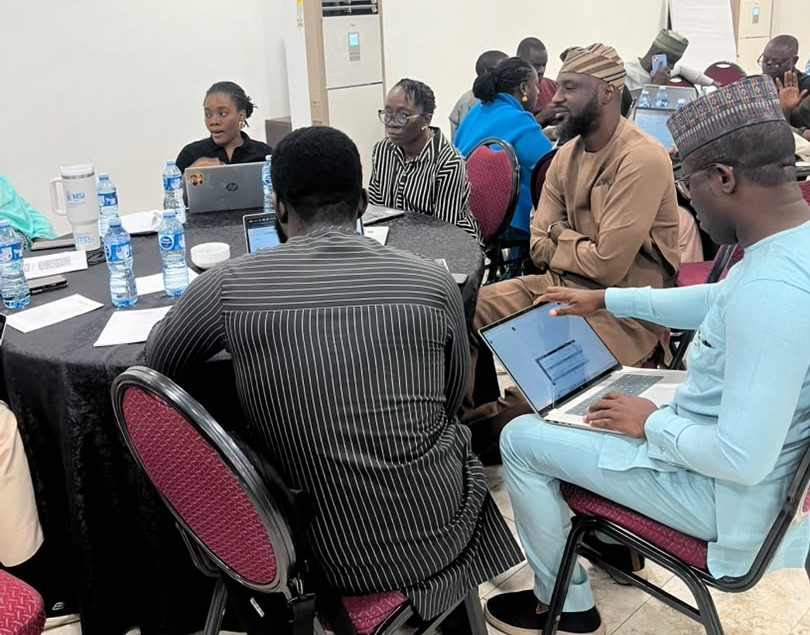
The final day consolidated this into an agreed set of components for every training package: slides with clear learning objectives, OSCEs, pre-tests and post-tests where applicable, simulation sessions with embedded case scenarios, an agenda with module timings, a facilitator guide, job aids and action plans, and the supporting materials needed for delivery.
One clarification from that session captures the workshop’s overall temper. A scenario is not the same thing as a simulation. The scenario sits inside the simulation session, which supplies the structure around it: preparation, briefing, clinical activity and debriefing. It is a small distinction, and precisely the kind that determines whether a training package produces competent teams or merely completed attendance sheets.
Why this is Important
Investments in maternal and newborn health innovations deliver far more when they are integrated than when they compete for the same limited hours of the same health workers. A harmonised, competency-based platform anchored in national guidelines, owned by states, and reinforced continuously at facility level changes what a team is able to do in the minutes that decide whether a mother goes home with her baby.
That is the work this workshop advanced, and the standard against which TEAM-OB/NEO will be measured as it moves into implementation.